The Everything Educator

Teacher to teacher

The first day of Spanish class: what actually happens, and why four of these teachers teach no procedures at all

We read the Spanish-teacher blogs that hold the first page for this and found they disagree about the two biggest questions: how much Spanish on day one, and whether to teach procedures at all in week one. Credited by name, with the first-day activities in Spanish.

Updated 2026-09-07

On the first day of Spanish class, four of the five teachers who rank for this phrase teach no procedures at all. They greet at the door, put a name activity in front of students, and get one real sentence of Spanish out of every mouth. Rules, syllabus and routines start on day two or day three, once the roster stops moving. That is the finding, and it is not what the phrase "routines and procedures" leads you to expect.

We read the pages that hold the first page for "first day of Spanish class routines and procedures," which is five individual profe blogs, kept their names on their ideas, and lined up the two questions they answer differently. The activities at the bottom are ours, made for a K-12 Spanish room by a twenty-year Spanish teacher.

The first ten minutes, four ways

Every one of these teachers has decided what happens at the door, and none of them leaves it to chance. Allison Wienhold at Mis Clases Locas greets every student in Spanish with a smile, a handshake and a seating card, with Spanish music already playing. Erin Coleman at The Engaged Spanish Classroom greets, asks names and takes attendance at the door rather than from the front, because it builds trust before nerves have time to set. Moira at Celtic Casa Mama has a password.

The seat is decided in advance in three of the four rooms. Wienhold hands out the seating card at the door. Coleman builds the chart before students arrive, in groups of four or five, and keeps it through the first quarter with the note that choosing your own seat is something a class earns. The point is not the chart. It is that no minute of day one is spent negotiating.

The three routines worth teaching in week one

Across all five pages, these are the only routines taught early. Everything else waits, and most of it waits until the second week.

  • The doorA greeting that is the same every day. A handshake, a password, or a choice of greeting on a poster
  • The boardEl orden del dia in the same corner, so nobody asks what we are doing today
  • The warm-upAlready projected when students walk in, on a sheet that lives in the room and gets collected weekly

The five first days, credited

These are their days, in their words where we could keep them. The links go to the posts the ideas came from.

Allison Wienhold

Mis Clases Locas

Greeting at the door in Spanish with a handshake and a seating card, music playing, then an introduction of herself entirely in Spanish with actions and movement. Then Name Game Speedball in a circle, where students toss a ball, say their name and repeat the ones before them.

Every student says me llamo out loud on day one, inside a game, without being asked to perform. That is the whole design of it.

Dianna

La Profe Plotts

A star on the board with five numbers on it, each standing for a fact about her, and students ask yes or no questions to work out what each number means. Then they draw their own star and the room guesses. Then a ball toss on como te llamas and me llamo.

She finishes with a collaborative poster where every student colors one square of a larger picture and a fourteen-question survey she uses all year. No rules, no procedures, no syllabus.

Erin Coleman

The Engaged Spanish Classroom

Greeting and attendance at the door, assigned groups of four or five, then a cognate game and a class brainstorm on the board answering one question: que vamos a aprender este ano.

She keeps Spanish minimal on day one with true beginners, on purpose, and spreads the syllabus, grading, bathroom and expectation conversations across the whole first week instead of stacking them into one period.

Moira

Celtic Casa Mama

The one teacher here who does teach a procedure on day one, and it is exactly one: she says clase, the room answers si. She then enforces it on day two, which she describes as the day that proves you meant it.

A password at the door gets the first Spanish out of every student before they sit down. Her students are producing me llamo and me gusta by day two inside a storytelling approach.

Dianna, on the routines that come next

La Profe Plotts, routines and procedures

The seven systems she teaches once the roster settles: material boxes with the rule that what comes out goes back in, a weekly warm-up sheet students pick up Monday and hand in Friday, el orden del dia on the board, handwritten note booklets, an absent binder holding a copy of every handout, index cards for calling on students, and a supply center students use with no questions and no shaming.

That absent binder is the day-three routine that fixes the week-one problem: students who joined your class after day one can catch themselves up without a conversation.

What they stopped doing

Two of the five publish a list of abandoned first-day habits, and the overlap between them is the useful part.

Erin Coleman, The Engaged Spanish Classroom

Five things she stopped. Clock and map buddies, because students resisted them and forgot who their partner was. Talking all period, because it filled the day and connected her to nobody.

Reviewing the whole syllabus in one session, because it overwhelmed students who had four other first days that week. Making student folders in the first days, because schedules were still changing and the folders were wrong by Friday. And doing things because she felt she was supposed to, which is the one that generated the other four.

Allison Wienhold, Mis Clases Locas

She dropped the syllabus lecture entirely and moved it into stations students work through themselves, so that they leave the first day having learned something rather than having been told about the class.

Dianna, La Profe Plotts

Her stated reason for teaching no procedures on day one is that class lists fluctuate a lot that first week. It is not a philosophy. It is a scheduling fact, and it is the same reason Coleman stopped making folders.

So the rule the five of them agree on

Day one teaches the door, not the rules. Procedures start the day the roster stops moving.

Anything taught on day one to a roster that changes by Friday has to be taught twice, and the second teaching is the one students believe.

The first three days, in the order these pages actually run them

Not a script. The sequence four of five follow, with the reason each piece sits where it does.

Names, one sentence, and the door

Greet every student at the door in a way you will repeat all year. Put a name activity in front of them that a latecomer can join. Get one real sentence of Spanish out of every student inside a game. Wienhold's speedball and Dianna's ball toss both do exactly that.

One signal, enforced

Moira's clase and si, or whatever your attention signal is, taught and then held. Day two is when students find out whether the thing you taught yesterday was real, and she says so plainly.

The board, the warm-up and the absent binder

El orden del dia in its permanent corner. The weekly warm-up sheet handed out and started. The absent binder shown to everyone, because by day three you have students who missed day one.

The syllabus, as stations

Wienhold's version: students work through the syllabus themselves at stations while you talk to individuals. It covers the same ground as a lecture and it leaves you with a class you have actually spoken to.

What to skip

The full syllabus read-aloud on day one. Two of the five abandoned it by name, and the reason is not that it is boring, it is that students hear the same speech in six rooms that day and retain none of the six.

Skip the icebreaker that needs a stable roster. Clock buddies, partner assignments and student folders all assume the list you have on Monday is the list you have on Friday, and in most Spanish programs it is not.

The first-day files below

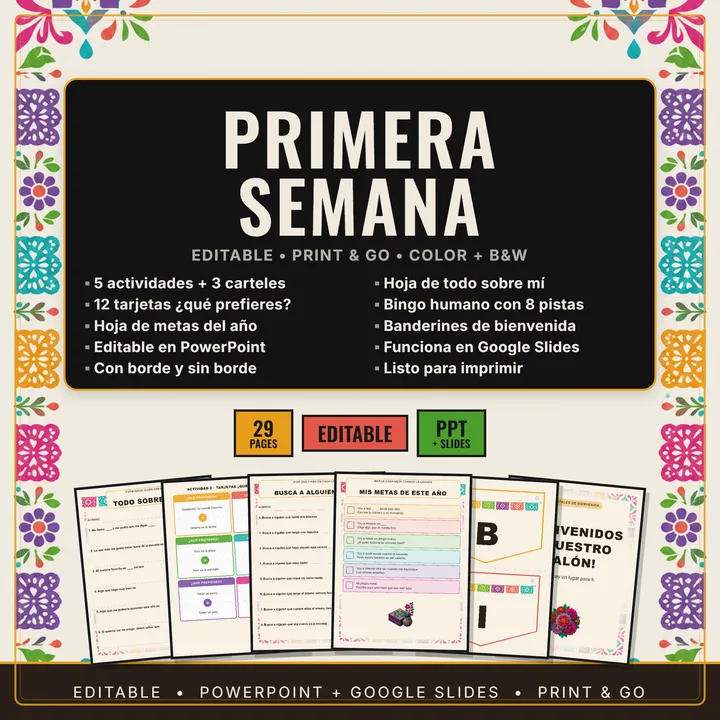
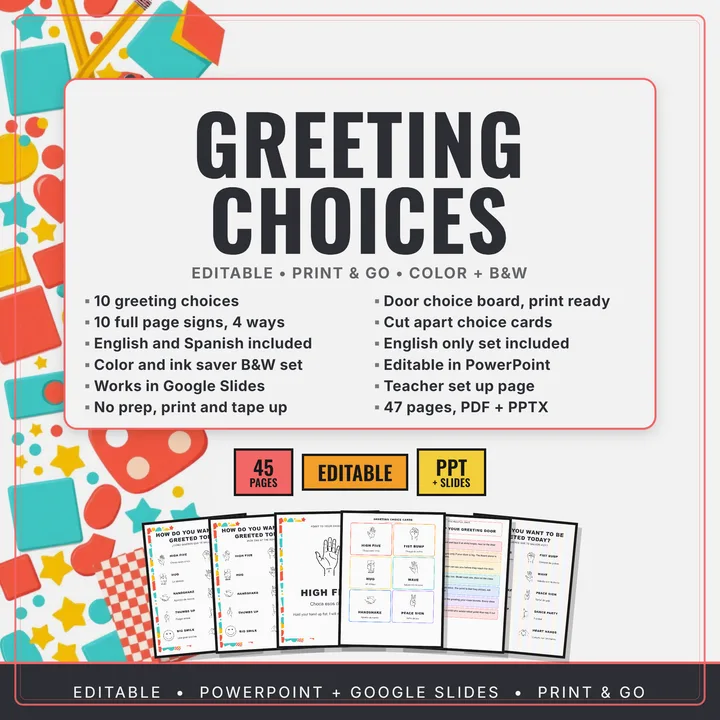
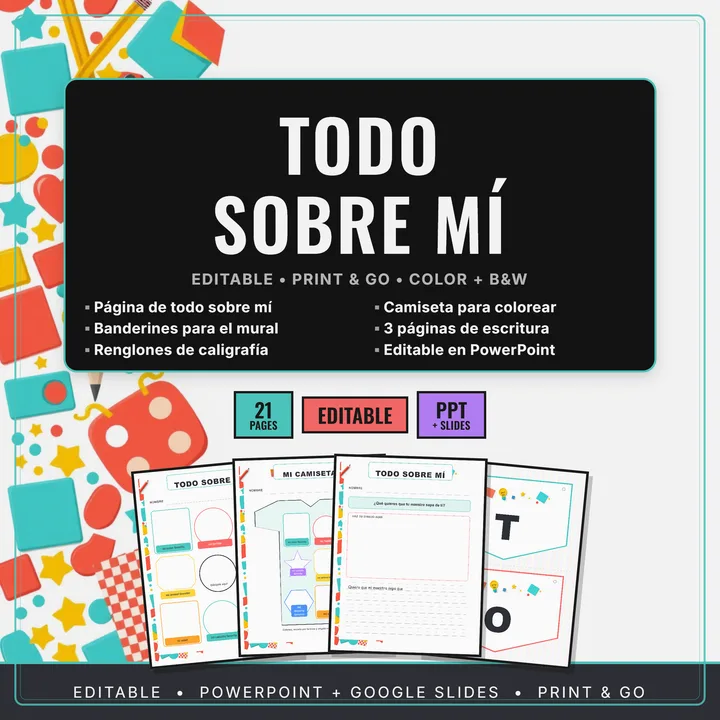
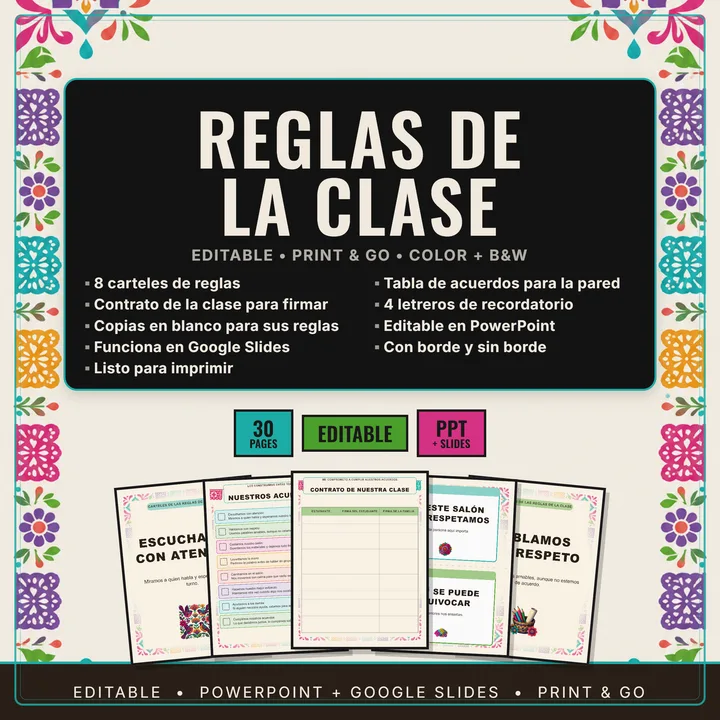
The primer dia activity pack, the first-week bundle, the door greeting poster, the Todo Sobre Mi activity and the rules and morning greeting sets are ours, in Spanish, editable. They are built to be the day-one activity that works on a moving roster and the day-three posters that go up once it settles. The free Todo Sobre Mi is the same file we publish, and it needs no email address.

Free download

Todo Sobre Mí GRATIS | Actividad Editable | All About Me in Spanish FREE

Free, and no email needed. It opens on Teachers Pay Teachers, where the file lives.

Get the free file

Questions teachers ask

Do you teach rules and procedures on day one or wait?
Four of the five teachers below wait, and Dianna at La Profe Plotts gives the reason out loud: class lists fluctuate a lot in the first week, so anything taught on day one is taught to a roster that no longer exists on day four. The exception is Moira at Celtic Casa Mama, who teaches one attention signal on day one and enforces it on day two, which is a single routine rather than a syllabus.
How much Spanish do students actually speak on the first day?
The pages disagree, and the disagreement is real. Allison Wienhold greets and introduces herself entirely in Spanish and runs a name game where every student says me llamo out loud. Erin Coleman deliberately keeps Spanish minimal on day one with a true Spanish 1 group. Both get students producing by the end of week one. What they share is that whatever Spanish happens on day one is a routine, not a lesson.
What do you do when rosters change every day for the first week?
Teach nothing that has to be re-taught. Day one activities that survive a changing roster are the ones a student can join at any point: a name game, a card everyone fills out, a poster the class builds a square at a time. Dianna's index card and collaborative poster both work that way, and Allison Wienhold moved her syllabus into stations partly for the same reason.
Editable  •  PowerPoint  •  Google Slides  •  Print and Go