The Everything Educator

Teacher to teacher

Hispanic Heritage Month in Spanish class: what the teachers who do it well actually do, week by week

We read the Spanish-teacher blogs that rank for this and pulled out what works, what they admit fails, and the four-week plan that makes every day end in Spanish. Credited by name, with the printables to run it.

Updated 2026-09-05

Hispanic Heritage Month runs September 15 to October 15, and in a Spanish class it works when every day of it ends with students saying or writing Spanish about something real from the Spanish-speaking world. It fails when it becomes a bulletin board and a playlist. That is not our opinion. It is what the teachers who rank for this phrase say about their own early attempts.

We do not run this month as a unit in our own room, so this page is not a diary. We read the pages that hold the top slots for "how to teach Hispanic Heritage Month in Spanish class," pulled out what those teachers actually do, kept their names on their ideas, and put the pieces in an order that keeps the language in it. The printables at the bottom are ours. The good ideas mostly are not, and the links go to the people who had them.

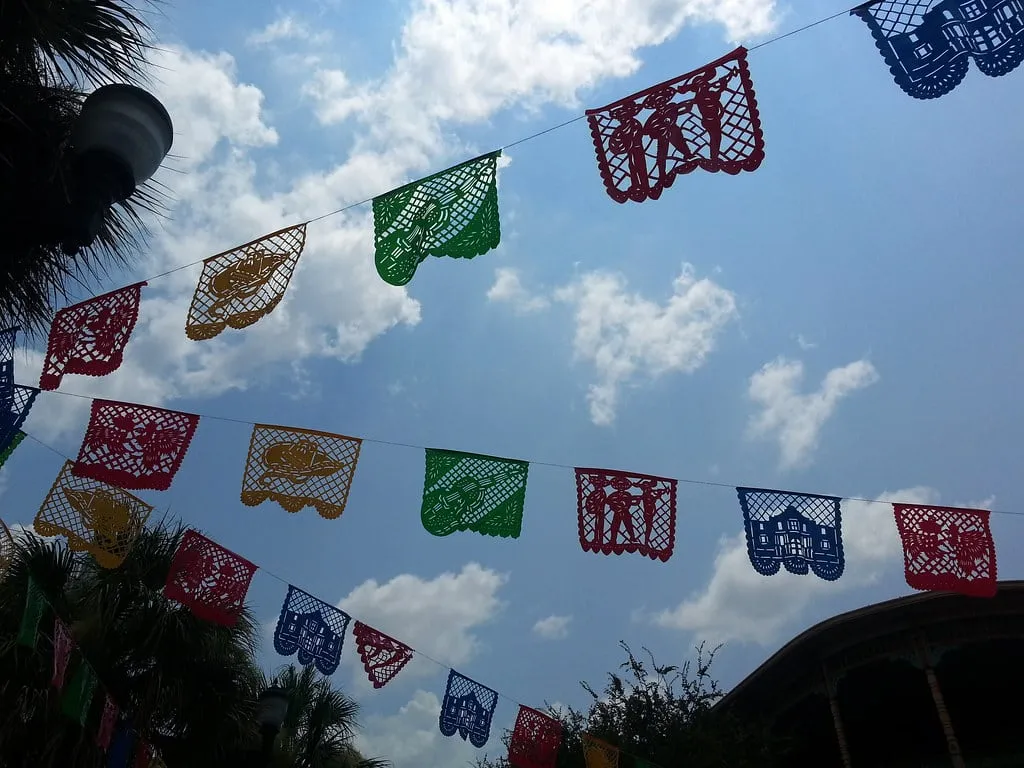
Papel picado strung over a street. The cut-paper banners are the month's most familiar image, and the one most likely to become the whole unit if nobody sets a language rule first.

Papel picado strung over a street. The cut-paper banners are the month's most familiar image, and the one most likely to become the whole unit if nobody sets a language rule first.

Photograph by Calsidyrose, CC BY 2.0

The dates, and why they matter on day one

Independence from Spain, five countries in one day. That is why the month opens in the middle of September rather than at the start of it.

  • September 15, 1821Costa Rica, El Salvador, Guatemala, Honduras and Nicaragua
  • September 16Mexico
  • September 18Chile

The month was set to open inside that cluster. That is a lesson, not a fact to post. Put the five dates on the board with no country names and have students guess before you tell them. Then hand out the country cards and let them find the five. Ten minutes, all of it in Spanish, and the month has a reason to exist that students can explain to a parent that night.

What the best pages do

Four teachers hold most of the first page for this phrase. Here is what each one runs, credited, because the ideas are theirs.

Allison Wienhold

Mis Clases Locas

A song a day, one per Spanish-speaking country, as the class starter. Students rank them and the month ends in a bracket where the class votes a winner.

She pairs it with a country-of-the-day slide: name, capital, two maps, a short travel video. Five to ten minutes a day, and by October 15 every student has heard 22 countries and can find them.

Ashley Mikkelsen

Srta Spanish

Short biographies of notable Hispanic people used as bell ringers, five to fifteen minutes. A one-day lesson built on an interactive map and a graphic organizer.

A molas craft from Panama that students read about first and then make. Her page is the most complete list on the first page, around 2,800 words.

Katherine Cruz

Sra. Cruz

A notable Hispanic American of the day as the warm-up, with a photo and a short video. Food Fridays with real dishes and, when families offer, family recipes.

A weekly show-and-tell she calls Muestra Martes, where students bring an object or a story from a Spanish-speaking country. And a hunt she calls Spanish All Around Us: students find Spanish in signs, ads and lyrics in their own town and bring it in.

Señora Havana

Grow Spanish

Art as the spine of the month. Week one maps the Spanish-speaking world. Week two puts one section of a Diego Rivera mural on the board and asks "¿Qué ves?" for fifteen minutes. Week three compares two artists. Week four lets students pick the work they want to talk about.

A single 30-minute Botero lesson runs the same way: look, describe, learn three facts, connect it to Colombia, then "¿Te gusta esta obra? ¿Por qué?"

What they say went wrong

This is the part most roundups leave out, and it is the most useful part.

Señora Havana, Grow Spanish

Most teachers know what happens next: September flies by, a bulletin board goes up, a playlist gets shared, and then it is October and the moment has passed. Her diagnosis is blunt. Most Hispanic Heritage Month activities are passive. Students read a biography, watch a video, fill in a country map. Those build knowledge. They do not build language.

Allison Wienhold, Mis Clases Locas

In her first years she did not do a good job making the month a priority.

Katherine Cruz, Sra. Cruz

She hears the same thing from other teachers: there is too much material to cover, so culture gets squeezed out.

Put those together and you have the rule

The month has to run inside the class you were already teaching, in ten-minute pieces, and every piece has to end in Spanish that students produce.

Anything that only decorates or only informs is optional.

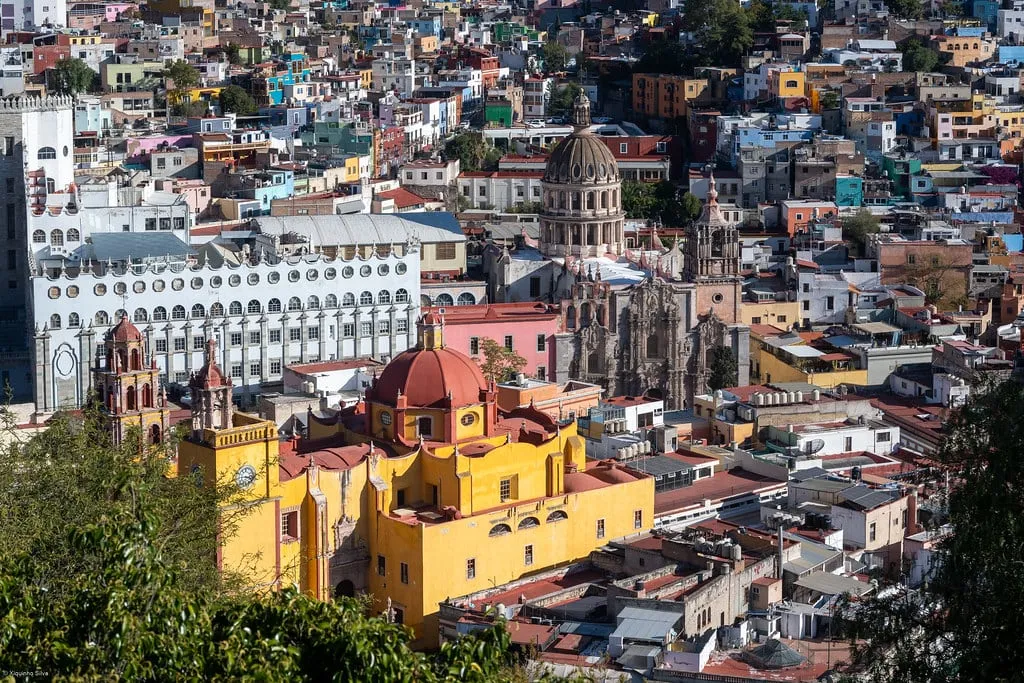
Guanajuato, Mexico. Twenty-two countries is a lot of ground for four weeks, which is why the plan below moves one country a day rather than one project a month.

Guanajuato, Mexico. Twenty-two countries is a lot of ground for four weeks, which is why the plan below moves one country a day rather than one project a month.

Photograph by xiquinhosilva, CC BY 2.0

The four-week plan

Every day below ends with students saying or writing at least two sentences in Spanish about what they just did. That is the whole difference between a month that builds language and a month that builds a wall.

The map and the dates

Open with the five-dates guessing game above. Then start a country a day, Wienhold's way: one card, one capital, one short video. Novice students can do that on day two.

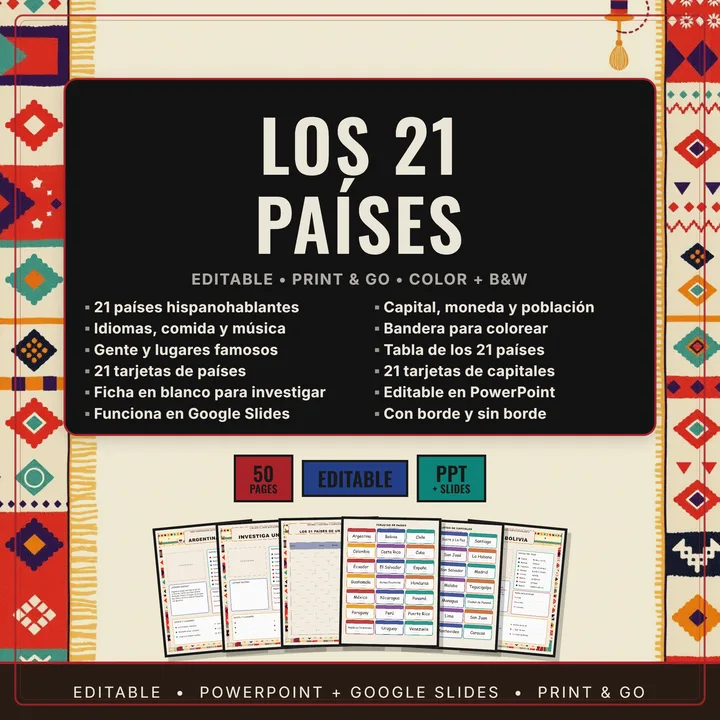
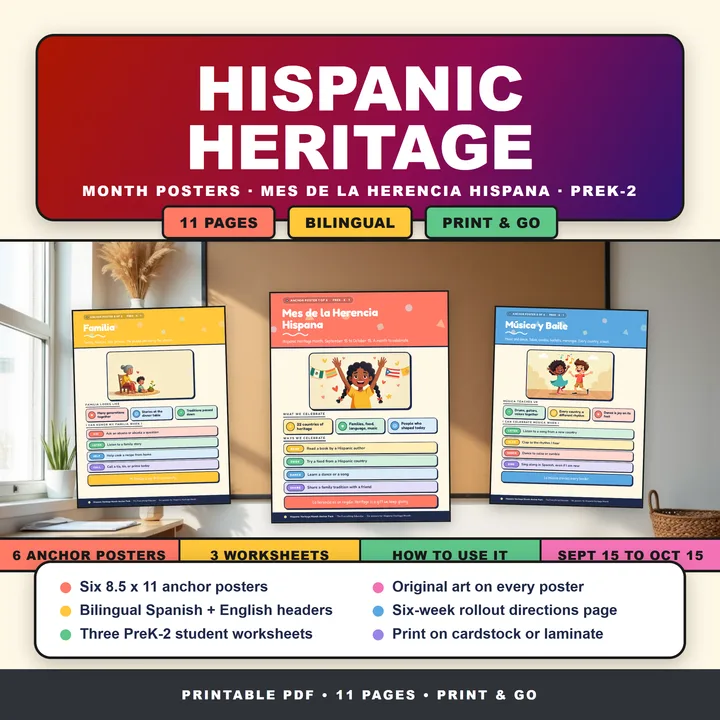
The 21 country fact cards are the deck for this; one card goes up on the wall each day, so the wall builds itself and nobody makes a poster.

Ends in SpanishTwo sentences from every student. "Guatemala está en Centroamérica. La capital es Ciudad de Guatemala."

The people

Cruz's notable person of the day as the warm-up, five minutes. Students write who the person is and one thing they did, in Spanish, at whatever level they have. Mikkelsen's short biographies work as the reading here.

For heritage speakers, this is the week to hand over Muestra Martes and let them run the room for ten minutes.

Ends in SpanishBy Friday they pick one person and tell a partner about them for one minute.

Art and music

Havana's "¿Qué ves?" with one mural section a day is the best fifteen minutes on any of these pages, because describing a picture is speaking practice that does not feel like speaking practice.

Run Wienhold's song bracket alongside it, but make the vote cost a sentence.

Ends in SpanishNobody votes without saying why in Spanish.

The books and the reflection

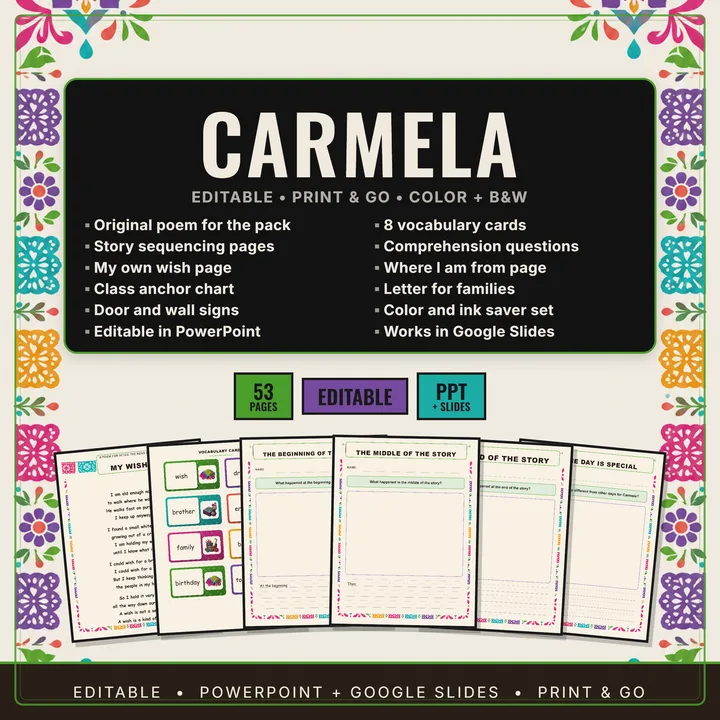
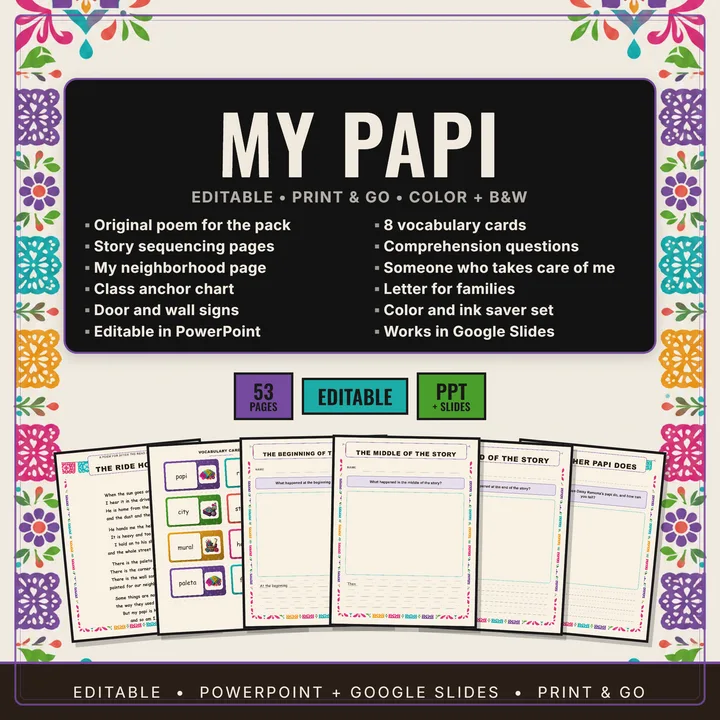
A picture book works in a secondary room when it is read for the language and the argument, not for the pictures. Carmela Full of Wishes and My Papi Has a Motorcycle both give a class of teenagers something to disagree about in Spanish, and both companions below are built for that.

That paragraph is the assessment, and it is also the thing that proves the wall was never the point.

Ends in SpanishOn October 15, Havana's closing question: which person, work or place from the month stayed with you, and why. Written, in Spanish, one paragraph.

What to skip

The single research project where every student gets a country and makes a poster. It fills three weeks, produces twenty-one posters in English, and every teacher above has quietly replaced it with ten-minute daily routines.

If you want the project, make it the last week and make it oral.

The printables that run this

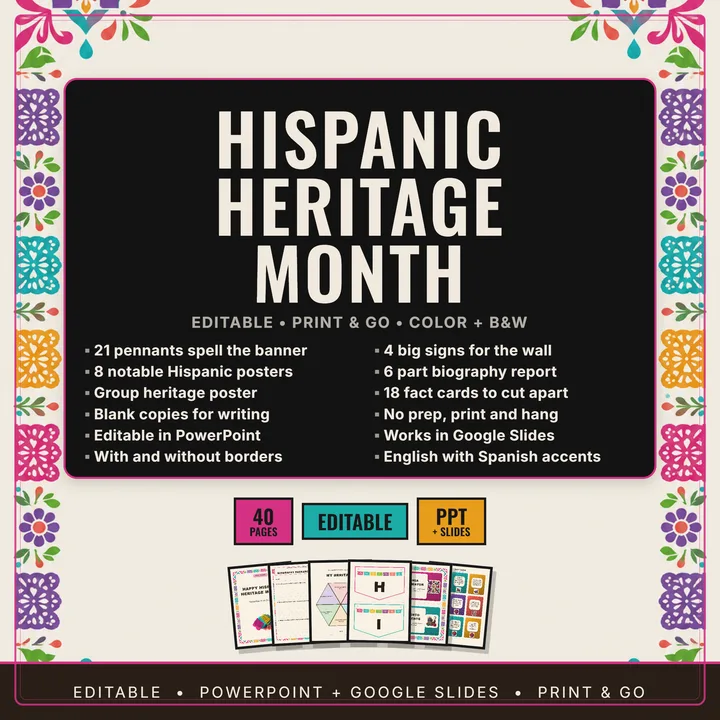
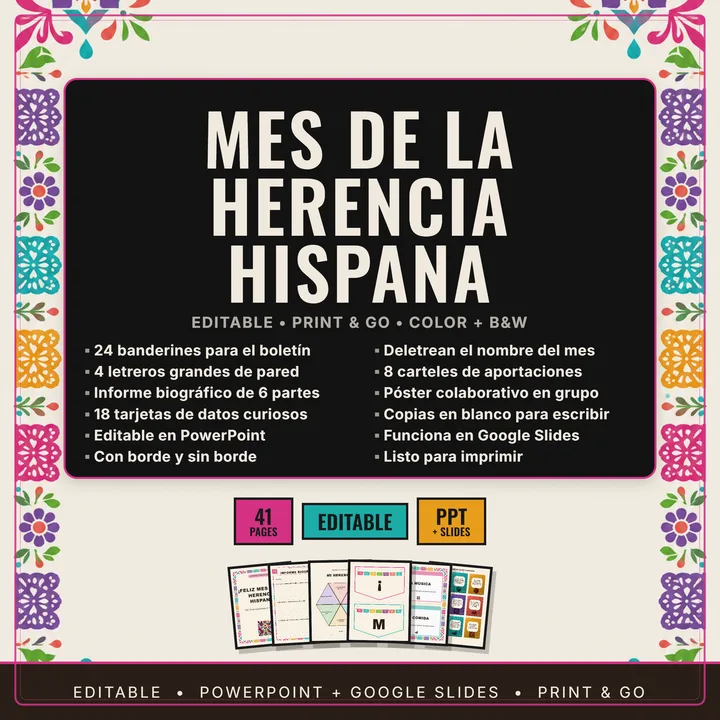
The cards, the wall kit, the banners and the two book companions below are ours. They exist to make the plan above a five-minute prep, not to replace it. The free set of banners, labels and posters in Spanish is the same one we use, no email needed.

Free download

Recursos Gratis en Español | Banderines, Etiquetas y Carteles para el Salón

Free, and no email needed. It opens on Teachers Pay Teachers, where the file lives.

Get the free file

Questions teachers ask

Why does Hispanic Heritage Month start on September 15?
Five countries declared independence from Spain on September 15, 1821: Costa Rica, El Salvador, Guatemala, Honduras and Nicaragua. Mexico's date is September 16 and Chile's is September 18, so the month was set to start in the middle of that cluster and run to October 15. Congress made it a week in 1968 and a month in 1988.
How do I keep it from turning into one poster per country?
Give the month a language rule instead of a product rule: every activity ends with students saying or writing Spanish about what they just saw. A country a day with two sentences beats twenty-one posters, and the teachers who rank for this phrase say the same thing in their own words below.
What do heritage speakers do during the month?
Make them the experts. Katherine Cruz runs a weekly show-and-tell where students bring an object, a photo or a story from a Spanish-speaking country. Heritage speakers carry that day, in Spanish, and the class asks the questions.
Editable  •  PowerPoint  •  Google Slides  •  Print and Go