The Everything Educator

Teacher to teacher

How to get students speaking Spanish: the structures that work, and the point systems that are still everywhere

Seven Spanish teachers rank for this phrase and they split into two camps: one takes points away for English, one removes the reasons not to speak. We read all of them, kept their names on their ideas, and laid the split out. With the chat mats and projects at the bottom.

Updated 2026-09-07

Students speak Spanish when saying something is easier than not saying it. That means three things in the room: a reason to talk that is an opinion rather than a fact, the words visible within arm's reach, and enough silence before the question that the first answer is a considered one. Every page that ranks for this phrase is describing some version of those three, except one, which takes points away for English instead.

We read all seven pages that hold the first page for "how to get students speaking Spanish in class," which is the softest phrase in our whole gate batch and is held almost entirely by individual profes. We kept their names on their ideas. The chat mats and projects at the bottom are ours, made for a K-12 Spanish room by a twenty-year Spanish teacher.

The target, and where it comes from

ACTFL recommends that language educators and their students use the target language as exclusively as possible, 90% and above, at all levels of instruction. That is the number these pages are all implicitly working toward, and it is worth stating because 90% is a very different goal from "speak more Spanish." It means the default language of the room is Spanish and English is the exception you have to justify, rather than the reverse.

Erin at The Spanish Brew is the only one who describes a whole lesson built to hit it: a bell ringer of two quick questions, calendar and weather talk, a picture talk on one interesting image with true or false comprehension checks, and then a guessing game built from the answers students gave in the bell ringer. Her note on delivery is the useful part. When she reveals who a clue is about, she stretches it out and acts surprised rather than stating it, because the stretching is where the repetitions come from.

The three conditions, and what each one removes

Underneath five of the seven pages, the same three levers. Each removes one specific reason a student stays quiet.

  • Something worth sayingOpinion questions produce more language than factual ones, because a student can be right about an opinion
  • Words within reachChat mats, sentence frames, question words on the wall. The scaffold fades over a semester, not over a week
  • Time before speakingTen seconds of thinking after the question and before the first hand. Silence is the scaffold nobody prints

The seven, credited

These are their structures, in their words where we could keep them. The links go to the posts the ideas came from.

Señora Havana

Grow Spanish

Five moves, and the sharpest one is the second: ask the question, then count to ten before anyone answers. She also makes the case for visual anchors, so that students are not trying to imagine and produce at the same time, which is two jobs where a novice can only do one.

Her art study is the best fifteen minutes on any of these pages. Look in silence, observe with single words allowed, describe with frames, interpret, then respond. Each stage is a step up in difficulty and the class only notices the last one.

Christina

Super Señora

Five activities deliberately ordered from low stakes to high: This or That, where the student picks between two options and gets a follow-up question; Find Someone Who, circulating with a list; turn and talks with the question projected; a Taboo-style describing game; and a Socratic seminar where she stops talking entirely.

Her framing line is the one to keep: you cannot expect a class to hold full conversations in Spanish on day one, so you build the opportunities in.

Specialty Spanish

Specialty Spanish

The anxiety page. Community first, because students speak in front of people they feel safe with. Scaffolds within reach: high-frequency word lists, chat mats, notes they are allowed to use.

The practical detail nobody else has: play music during recorded speaking assessments. Students start and finish at different times, and silence in a room where one person is talking is what makes speaking feel like performing.

Erin

The Spanish Brew

A whole comprehensible input lesson shape, timed, that gets a class near the ACTFL target without an English explanation in it. Bell ringer, calendar talk, picture talk, guess the student.

She is candid that explaining grammar entirely in Spanish felt impossible to her with a textbook approach, and that the input structure is what made it possible rather than willpower.

Sherry Sebesta

World Language Cafe

The other camp, and the most widely copied set of ideas on the phrase. A Spanish word on the board loses a letter every time someone speaks English, and the class earns a reward if letters survive the period. Classes compete against each other on tally marks.

Students get three dried beans and lose one for English. Students get three name cards and must spend all three to earn participation credit. Students wear clothespins that classmates take when they catch English. Her name card version is aimed specifically at reluctant students, and it is the one of the five that adds an opportunity rather than removing a token.

Where the pages contradict each other

Three genuine disagreements. We are flagging them rather than resolving them, because resolving them would take a measurement none of these pages ran and neither did we.

Points, or no points

World Language Cafe's five systems all work by taking something away when a student speaks English. Every other page on the first result page builds the opposite mechanism: make speaking the easy option and the English stops being necessary.

Both approaches are published by working Spanish teachers and both have people who swear by them. What we can say is that the anxiety pages and the points pages are solving different problems. If your class is quiet, points give a quiet class one more reason to stay quiet. If your class is loud in English, points are at least aimed at the right behavior.

When the scaffolds come down

Specialty Spanish lets students use vocabulary lists and notes during speaking. Super Señora projects the question during turn and talks. Neither says when the support is removed, and a scaffold nobody ever takes away is not a scaffold, it is a script.

Error correction

Nobody addresses it. Seven pages, no protocol, on the question every new Spanish teacher asks second.

So the rule the five structural pages share

Speaking is not something you ask a class for. It is something you make easier than the alternative.

Every one of the structures above removes a specific obstacle: nothing to say, no words in reach, or no time to think. Fix the obstacle and the asking stops being necessary.

Building it into a class you already teach

Four changes, in order of how little they cost. None of them is a new unit.

Add the ten seconds

Ask, then wait. Grow Spanish counts to ten. It is the only change on this page that costs nothing and it changes who answers, because the fast student stops being the only one with an answer ready.

Put something on the board to talk about

An image, a piece of art, a photo of a place. Describing something visible is speaking practice that does not feel like speaking practice, and it removes the invention step for a novice.

Put the words within reach and leave them there

Chat mats on the desks, question words on the wall, the frames projected with the prompt. Super Senora projects the question during turn and talks for exactly this reason. Fade them over a semester, not over a week.

Make the prompt an opinion

Grow Spanish's finding, and the one that changes the most for the least work: opinion questions generate more language than factual questions, because a student who is defending a position has something to add and a student reciting a fact does not.

What to skip

The Spanish-only pledge with no scaffold behind it. Every structural page on this phrase is building the conditions first, and a rule that arrives before the conditions is a rule that punishes students for the thing you have not given them yet.

Skip the whole-class open question as the default speaking task. Super Señora's ordering exists because a room where one student answers and thirty listen is not thirty students speaking. Turn and talks, This or That and Find Someone Who all put every mouth in motion in the same minute.

The files that put the words within reach

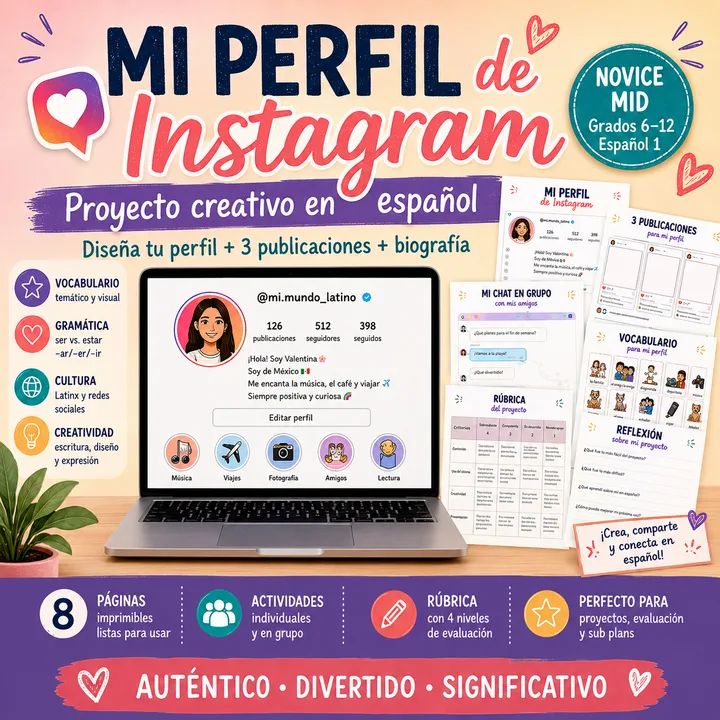
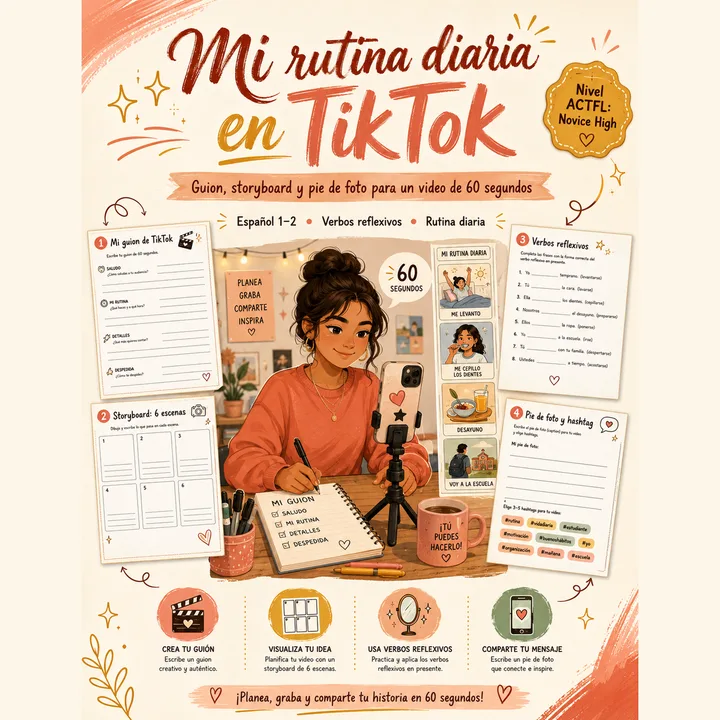
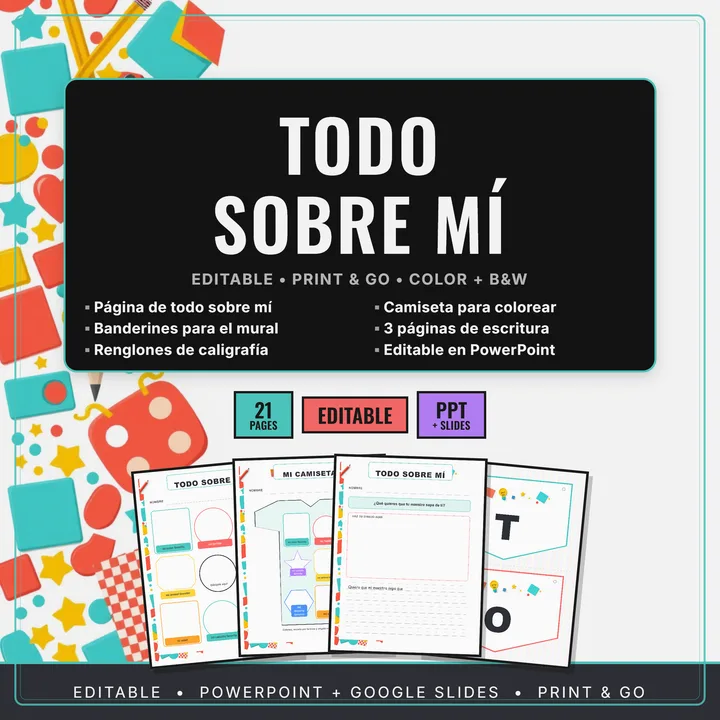
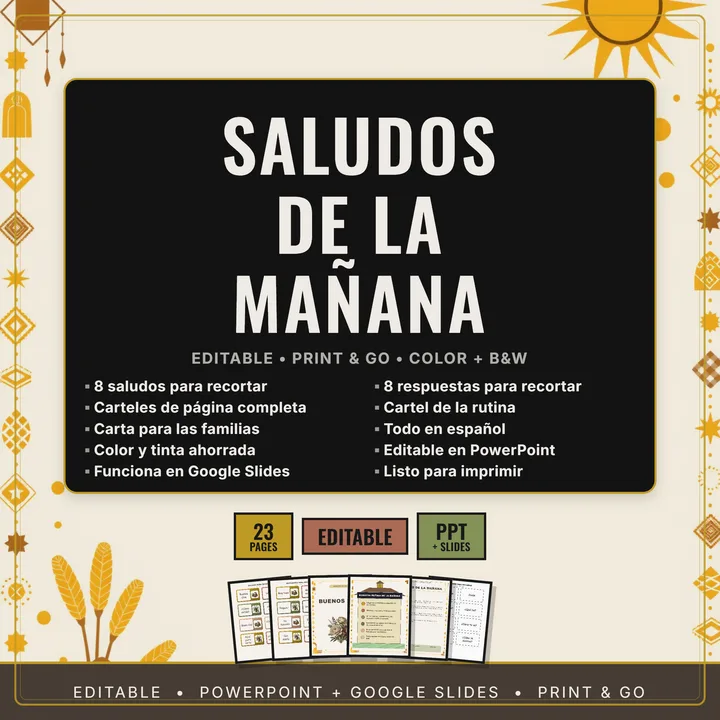
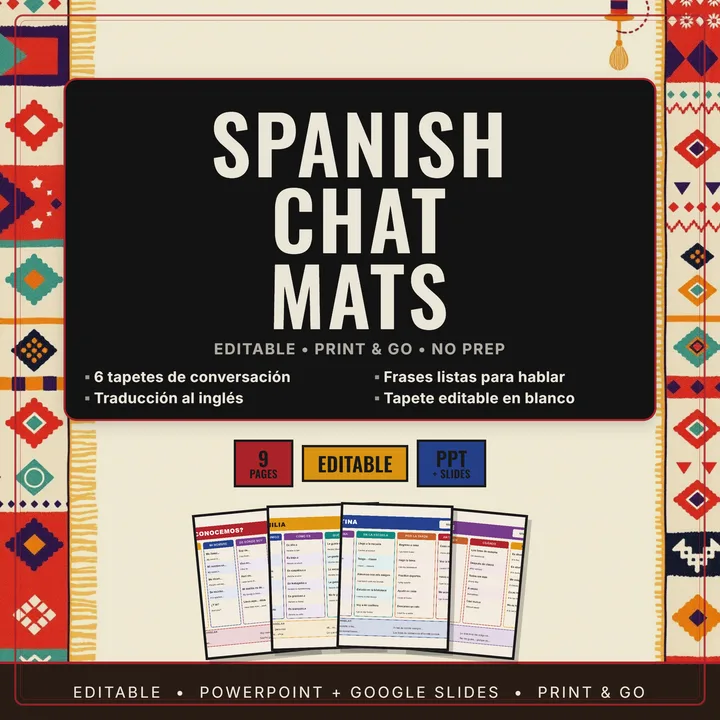
The chat mats, the three project formats and the greeting cards below are ours. The chat mats are the arm's-reach scaffold this page keeps naming. The Instagram profile, TikTok routine and food delivery projects exist because of the opinion finding: students talk about a fake profile of themselves for longer than they talk about a picture in a textbook. The free Todo Sobre Mi is the same file we publish, and it needs no email address.

Free download

Todo Sobre Mí GRATIS | Actividad Editable | All About Me in Spanish FREE

Free, and no email needed. It opens on Teachers Pay Teachers, where the file lives.

Get the free file

Questions teachers ask

What do you do about the students who refuse to speak?
The ranking pages answer this with structure rather than pressure. Grow Spanish gives ten seconds of thinking time before anyone has to answer. Super Señora orders activities from low to high stakes and starts with a two-option choice, not an open question. Specialty Spanish names the anxiety out loud and plays background music during recorded speaking so a student is not performing into silence. None of them recommends calling on a silent student cold.
Do rewards and point systems for speaking Spanish work, or do they backfire?
This is the one thing the seven pages actively disagree about. World Language Cafe publishes five compliance systems: erase a letter of a word when someone speaks English, remove a dried bean, take a clothespin, tally the class against other classes. The other pages never mention points, and build the opposite mechanism: give students something worth saying and put the words within reach. We have not measured either against the other, and we are not going to pretend we have.
How do you correct errors without stopping the talking?
Not one of the seven pages gives a correction protocol, which is worth knowing before you go looking for one. What they give instead is prevention: sentence frames and chat mats within reach, an image on the board so the student is describing rather than inventing, and enough thinking time that the first attempt is the student's best attempt rather than their fastest.
Editable  •  PowerPoint  •  Google Slides  •  Print and Go